
pH Management Guide - Homegrown Nursery
pH Management Guide
More struggling cannabis plants trace back to incorrect pH than almost any other single cause. A plant can be watered and fed correctly and still show classic deficiency symptoms — yellowing leaves, slow growth, discolored spots — simply because the pH of its root zone is outside the range where it can actually absorb the nutrients available to it. This guide covers what pH range to target for your specific growing medium, how to test it accurately, and how to fix it when it drifts. If you're just getting your equipment together, see our Indoor Grow Setup Checklist for the full equipment list, including pH meters and test strips.
Why pH Matters More Than It Seems
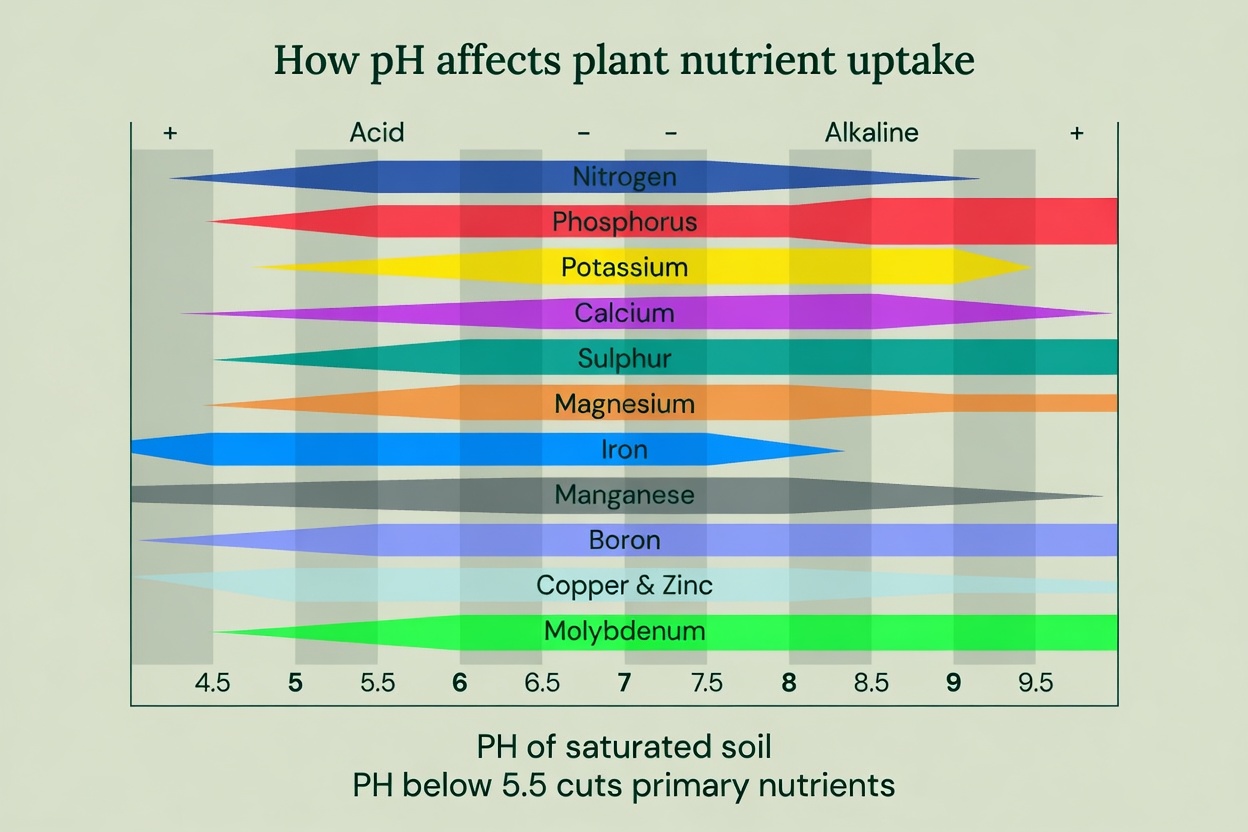
Nutrients in soil or a growing solution don't automatically become available to a plant's roots. At the wrong pH, essential nutrients like nitrogen, phosphorus, and iron can become chemically locked out — present in the medium, but in a form the roots can't take up. This is called nutrient lockout, and it's one of the most common reasons a plant shows deficiency symptoms even when it's being fed properly. Correcting pH is often the fastest fix for a struggling plant, faster than adjusting your feeding schedule.
Target pH Ranges by Growing Medium
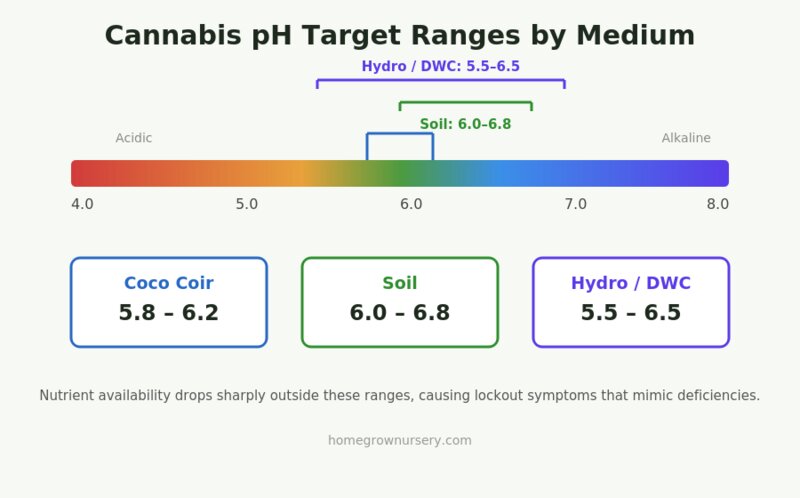
Soil: 6.0–6.8
Soil has natural buffering capacity, meaning it resists pH swings better than soilless mediums. This makes soil somewhat more forgiving for beginners, but it's still worth checking every few waterings rather than assuming it's staying stable on its own.
Coco coir: 5.8–6.2
Coco coir is a popular soilless medium, but it has little natural buffering capacity and can also affect pH readings due to naturally occurring cations in the coco fiber itself. A tighter target range and more frequent checking matters more here than in soil.
Hydroponic, DWC, and aeroponic systems: 5.5–6.5
Hydro systems have no buffering at all — the nutrient solution's pH is the only pH that matters, and it can drift significantly within a day or two as the plant draws nutrients and water unevenly from the solution. Many hydro growers aim for a tighter 5.8–6.2 sweet spot within this range for the most consistent results. Check hydro system pH every 1–2 days at minimum.
Why the ranges differ. Each medium has its own chemistry and its own relationship between pH and nutrient availability. Using a soil-range target in a hydro system (or vice versa) is a common beginner mistake that can cause exactly the lockout symptoms this guide is meant to help you avoid.
How to Test pH
pH meter (recommended). A digital pH meter gives the fastest, most accurate reading and is worth the investment once you're growing more than a single plant casually. See our Indoor Grow Setup Checklist for what to look for in a meter. Meters need occasional calibration using a calibration solution to stay accurate — check your specific meter's instructions for how often.
Test strips. A lower-cost option that works reasonably well for soil growers checking runoff water, though they're less precise than a meter and harder to read accurately for the tighter ranges hydro and coco growers need to hit.
What to actually test. For soil, test the runoff water after watering (the water that drains out the bottom of the container) rather than the water going in — runoff reflects what's actually happening in the root zone. For coco and hydro, test the nutrient solution itself directly, both immediately after mixing and again before your next feeding, since pH can drift over time even in a sealed reservoir.
How to Adjust pH
pH Up and pH Down. These are the standard products for adjusting a nutrient solution's pH — pH Down lowers it (more common need, since most tap water and many nutrient mixes trend slightly alkaline), pH Up raises it. Add gradually and re-test; overcorrecting is a common mistake, especially in smaller reservoirs where a small amount of solution has an outsized effect.
Adjusting soil pH is slower. Since soil buffers against quick changes, correcting it takes longer than adjusting a hydro reservoir. Consistent watering with correctly-pH'd water over several waterings will gradually bring soil pH back into range; a single correction won't fix it instantly the way it can in hydro.
Water source matters. Tap water pH varies significantly by location — some municipal water supplies run notably alkaline. If you're consistently fighting high pH despite correcting it, testing your source water before you add anything to it can reveal whether the water itself is the root cause.
Organic and Natural pH Adjustment Methods
If you're growing organically and prefer not to use synthetic pH Up/Down products, several household and garden-store items work as natural alternatives. These are especially popular among soil growers, since soil's natural buffering makes small organic adjustments easier to work with than in hydro.
To lower pH naturally:
Lemon juice. A small amount of fresh lemon juice added to water lowers pH effectively and is one of the most commonly used organic options. Add it gradually — a quarter teaspoon at a time per gallon is a reasonable starting point — and re-test before adding more, since it's easy to overshoot.
White vinegar. Works similarly to lemon juice and is often already on hand. Use sparingly and test as you go, the same as with lemon juice.
Citric acid. Sold as a powder or in crystal form, citric acid is essentially a more concentrated, measurable version of what's in lemon juice, which makes it easier to dose consistently once you know how much your water needs.
To raise pH naturally:
Baking soda. A small amount of baking soda dissolved in water raises pH and is widely used as an organic pH Up substitute. Go slowly — baking soda can push pH up faster than expected, and overcorrecting is harder to walk back than undercorrecting.
Garden lime (dolomite lime). Especially useful for soil growers, since it can be mixed into soil directly (rather than just the water) to raise and help stabilize pH over time, in addition to adding calcium and magnesium. It acts more slowly than baking soda, which makes it more forgiving but not a fast fix for an urgent pH problem.
Wood ash. A traditional organic soil amendment for raising pH, though less precise than the other methods here — best used cautiously and in small amounts.
A general caution with organic methods: they're less precise than commercial pH Up/Down products, and effects can vary depending on your specific water chemistry and growing medium. Always adjust gradually and re-test before adding more, and avoid anything that introduces organic matter likely to spoil or grow bacteria in a standing reservoir — this is part of why we don't recommend dairy-based approaches some growers have experimented with; ingredients like milk can sour and introduce contamination risk, especially in hydro systems where the solution sits for days.
Recognizing Nutrient Lockout
Because lockout symptoms mimic ordinary nutrient deficiencies, it's easy to misdiagnose a pH problem as a feeding problem and make it worse by adding more nutrients on top of an already-locked-out root zone. Signs worth checking your pH over include yellowing between leaf veins while the veins stay green (often a sign of iron or magnesium lockout), slow or stalled growth despite a consistent feeding schedule, and leaf discoloration that doesn't match the specific deficiency pattern you'd expect from your feeding schedule. When in doubt, check pH before adjusting your nutrients — it's the faster and cheaper thing to rule out first.
Frequently Asked Questions
How often should I check pH?
Soil growers should check runoff pH every few waterings. Coco coir growers should check more frequently given the lower buffering capacity. Hydro, DWC, and aeroponic growers should check every 1–2 days at minimum, since these systems have no buffering at all and can drift quickly.
Can incorrect pH kill a plant?
Severe, prolonged pH problems can seriously stunt or kill a plant through sustained nutrient lockout, but most pH issues are recoverable once caught and corrected — especially in soil, where the buffering capacity gives you more of a margin than hydro systems provide.
Do I need different pH targets for vegetative growth versus flowering?
The target ranges in this guide apply throughout the plant's life cycle for a given medium. Some experienced growers make small adjustments within the range during flowering to influence nutrient uptake, but as a beginner, staying consistently within your medium's target range matters more than fine-tuning by growth stage.
My pH meter gives inconsistent readings — what's wrong?
This is almost always a calibration issue. Most digital meters need periodic calibration with a calibration solution to stay accurate, and probes can also drift or need cleaning over time. Check your specific meter's manual for its recommended calibration schedule.
Can I adjust pH without buying commercial pH Up/Down products?
Yes — lemon juice, vinegar, or citric acid can lower pH naturally, while baking soda or garden lime can raise it. These are popular with organic growers, though they're less precise than commercial products, so adjust gradually and re-test as you go. See the "Organic and Natural pH Adjustment Methods" section above for specifics.
Getting Started
New to growing from clone? Our Grow Guide covers the fundamentals, and our Indoor Grow Setup Checklist walks through the full equipment list, including pH meters and testing supplies. If you haven't picked a strain yet, our Strain Comparison Guide can help you match genetics to your setup.
CONTACT INFO
Phone: (714) 900-0989 Email: homegrownursery@gmail.com