
Training Techniques Overview - Homegrown Nursery
Training Techniques Overview
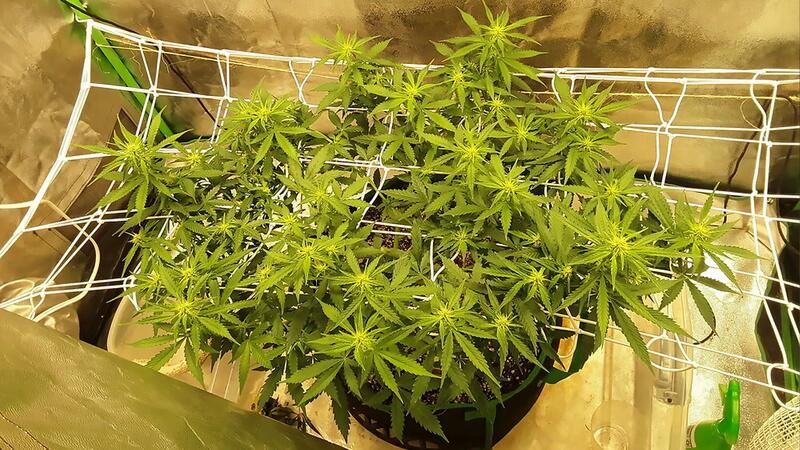
Left alone, a cannabis plant grows into a single dominant cola with smaller growth below it — a shape that wastes a lot of the light and space in a typical grow tent. Training techniques reshape how a plant grows, spreading its energy across a wider, flatter canopy so more of the plant sits directly under strong light instead of in the shade of its own top growth. This guide covers the two most common beginner-accessible techniques — low-stress training (LST) and screen of green (SCROG) — how each works, and which fits your setup and strain choice best. If you haven't picked a strain yet, see our Strain Comparison Guide for notes on which strains respond particularly well to training.
Why Train at All
Training isn't required to grow a healthy plant, but it solves a real problem for indoor and space-limited growers: a single untrained plant develops one dominant top cola while lower growth stays smaller and less developed, since it's shaded and gets less light. Training techniques counter this by manipulating the plant's shape, resulting in more evenly-sized buds across the whole canopy instead of one large top cola and several underdeveloped lower ones — often meaningfully increasing total usable yield from the same plant and the same tent.
Low-Stress Training (LST)
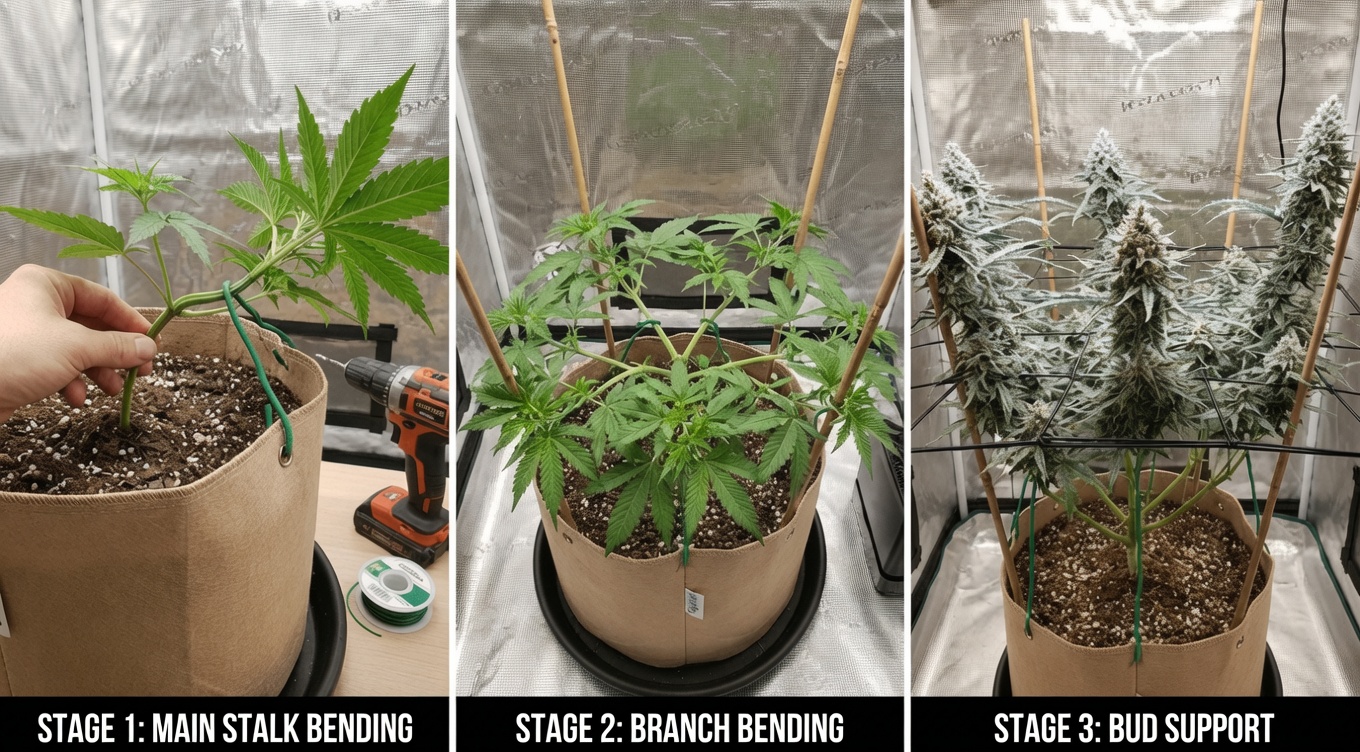
What it is. LST involves gently bending and securing a plant's branches — usually with soft ties, plant clips, or garden wire — to open up the canopy and encourage multiple colas to develop at a similar height, rather than one dominant top growing well above everything else.
How it works. As a plant grows, its main stem and branches are bent downward or outward and secured in place, redirecting the plant's growth hormones (which normally concentrate at the topmost point) toward multiple side branches instead. This creates a wider, flatter, more even canopy over time.
Why it's called "low-stress." Unlike more aggressive techniques that cut or damage plant tissue, LST works entirely through bending and tying — the plant experiences minimal physical stress and recovers quickly, making it one of the most beginner-friendly training methods available.
When to start. Begin LST during the vegetative stage, once the plant has developed enough sturdy stem growth to bend without snapping — typically a few weeks into veg. Continuing minor adjustments throughout veg keeps the canopy even as new growth appears.
Best suited for. Taller, sativa-leaning strains that would otherwise stretch well above the rest of the canopy — see our Strain Comparison Guide for specific strains that tend to benefit most. LST is also a good fit for smaller tents where height control matters as much as yield.
Equipment needed. Soft plant ties, garden wire, or purpose-made plant training clips — see our Indoor Grow Setup Checklist for the full equipment list.
Screen of Green (SCROG)
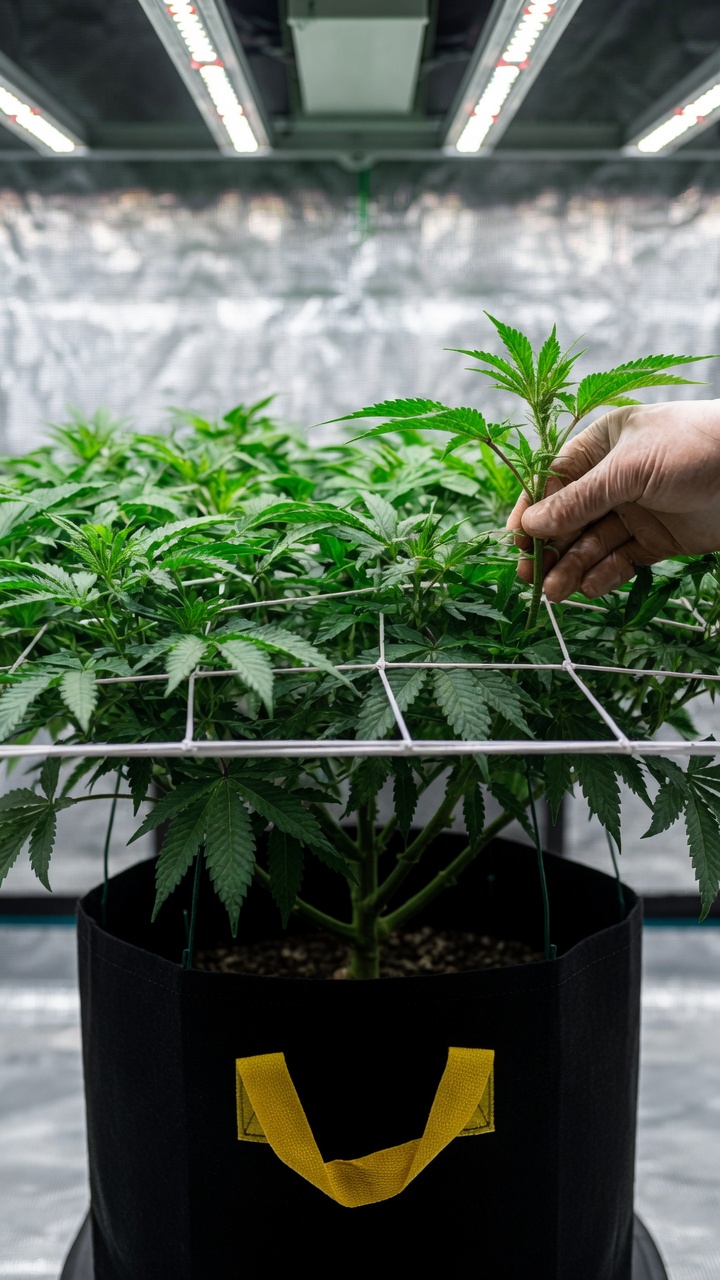
What it is. SCROG uses a horizontal screen or net, positioned above the plant, that branches are trained to grow through and spread across as they extend upward. The result is a single even layer of canopy growth spread across the whole screen, all sitting at roughly the same height under the light.
How it works. As branches reach the screen, they're gently guided sideways through the netting rather than allowed to grow straight up through a single gap. This spreads growth horizontally across the entire screen area before any of it is allowed to grow upward again, maximizing how much of the canopy receives direct light.
SCROG vs. LST. SCROG is a more structured, higher-commitment version of the same underlying goal as LST — an even canopy under the light. Where LST relies on manually tying individual branches throughout the grow, SCROG uses the screen itself to do much of that work once branches are woven through it, though it still benefits from some manual tucking and adjustment as the plant fills in.
When to start. Install the screen early in veg, positioned at the height you want the canopy to sit, and begin training branches through it as soon as they're long enough to reach.
Best suited for. Growers who want to maximize yield from a single plant in a fixed tent size, and strains with a naturally bushier growth pattern that fills a screen evenly. Also a strong option in states with strict per-plant limits, since it makes the most of every plant you're legally allowed to grow.
Equipment needed. Trellis netting sized to your tent's footprint, plus a way to secure it at the desired height — see our Indoor Grow Setup Checklist for details.
Choosing Between LST and SCROG
Choose LST if: you want a simpler, lower-commitment technique, you're training your first plant, or you're working with a strain that's naturally already fairly bushy and doesn't need dramatic reshaping.
Choose SCROG if: you're working with limited plant count and want to maximize yield per plant, you have a strain that grows tall and lanky, or you're comfortable with a slightly more involved setup and ongoing maintenance through veg.
You can also combine them. Many experienced growers use LST early in veg to establish an even base structure, then continue guiding growth through a screen as the plant fills out — the two techniques aren't mutually exclusive.
A Few General Training Tips
Train during veg, not flower. Most training should happen during the vegetative stage, while the plant is still focused on structural growth. Training during flower is riskier and can stress the plant during a stage where it should be focused on bud development instead.
Go gradual. Whether bending a branch for LST or weaving one through a SCROG screen, small, gradual adjustments reduce the risk of snapping a branch compared to one aggressive bend.
Watch for stress signs. Some minor drooping after training is normal and typically resolves within a day. If a branch cracks or splits, it can often still be saved by supporting it with tape or a splint while it heals.
Combine with proper airflow. A trained, spread-out canopy benefits even more from good airflow than an untrained plant, since a wider canopy has more leaf surface where humidity and mold can build up if air isn't moving well. See our Indoor Grow Setup Checklist for ventilation equipment.
Frequently Asked Questions
Does training reduce my yield since I'm bending the plant?
No — done correctly, training typically increases total usable yield by developing multiple even colas instead of one dominant top and several underdeveloped lower buds. There's a brief recovery period after training, but it's generally outweighed by the more even canopy over the full grow.
Can I train an autoflowering strain?
Carefully, and with less aggressive techniques. Autoflowers have a shorter, fixed life cycle and less time to recover from training stress compared to photoperiod strains, so light LST early on is more common than SCROG for autoflowers, which typically need more setup time than an autoflower's shorter veg period allows.
How long does it take to see results from training?
LST adjustments show a visible shape change within days as branches settle into their new position. SCROG results build up gradually over the vegetative stage as the canopy fills in the screen — the full effect isn't really visible until the plant is well into filling out the net.
Is training required for a healthy plant?
No — plenty of healthy, productive plants are grown without any training at all. Training is about maximizing yield and canopy evenness within a limited space, not a requirement for plant health.
Getting Started
New to growing from clone? Our Grow Guide covers the fundamentals, and our Indoor Grow Setup Checklist walks through everything you'll need, including training supplies. Keeping your root zone dialed in matters just as much as canopy shape — see our pH Management Guide for target ranges by growing medium.
CONTACT INFO
Phone: (714) 900-0989 Email: homegrownursery@gmail.com