
Heat Management - Homegrown Nursery
Heat Management
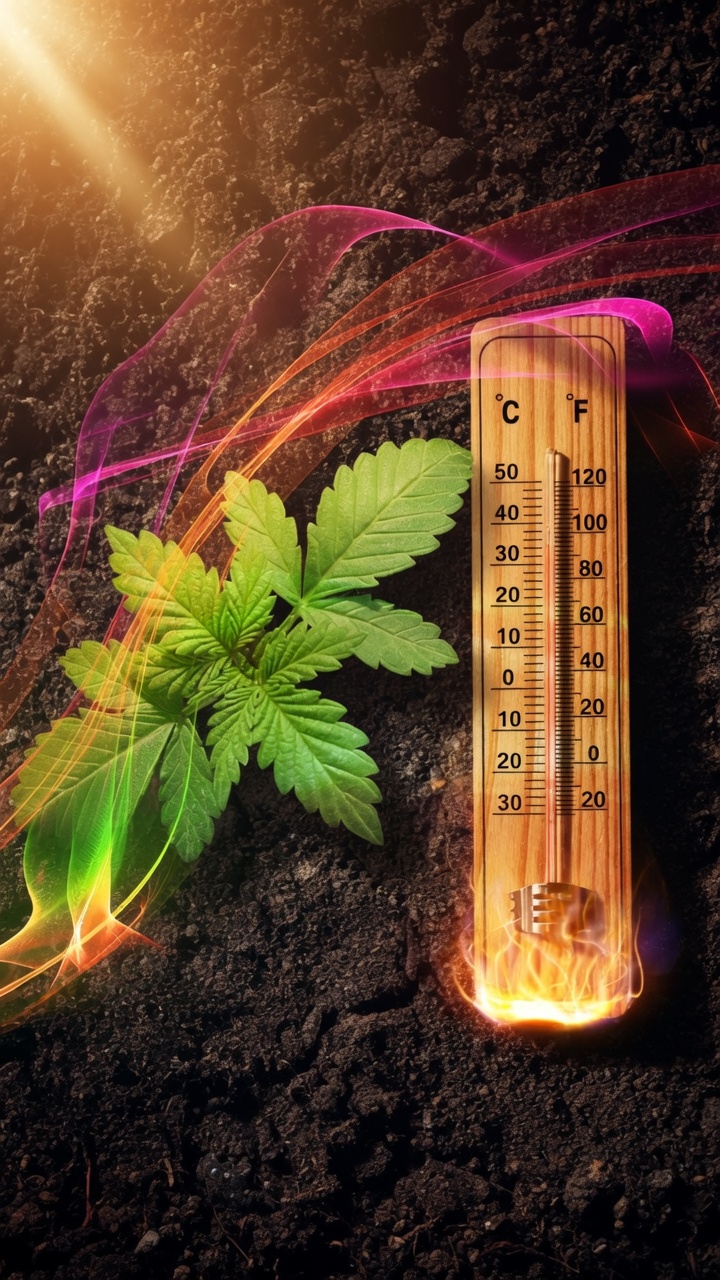
Heat stress is one of the most common reasons a summer grow underperforms, especially for outdoor growers in hot, dry climates or indoor growers whose lights generate more warmth than their space can handle. Cannabis can tolerate a fair amount of heat, but beyond a certain point, growth slows, leaves show visible stress, and bud quality can suffer. This guide covers how to recognize heat stress early and the practical steps to manage it, whether you're growing outdoors under intense sun or indoors under a powerful light. If you're in a particularly hot-climate state, check our Arizona or Nevada location pages for region-specific notes.
Why Heat Stress Happens
Cannabis plants regulate their temperature partly through transpiration — releasing water vapor through their leaves, which has a cooling effect similar to sweating. In extreme heat, especially combined with low humidity, a plant can't transpire fast enough to keep up, leading to stress symptoms even when the plant technically has enough water at its roots.
Recognizing Heat Stress
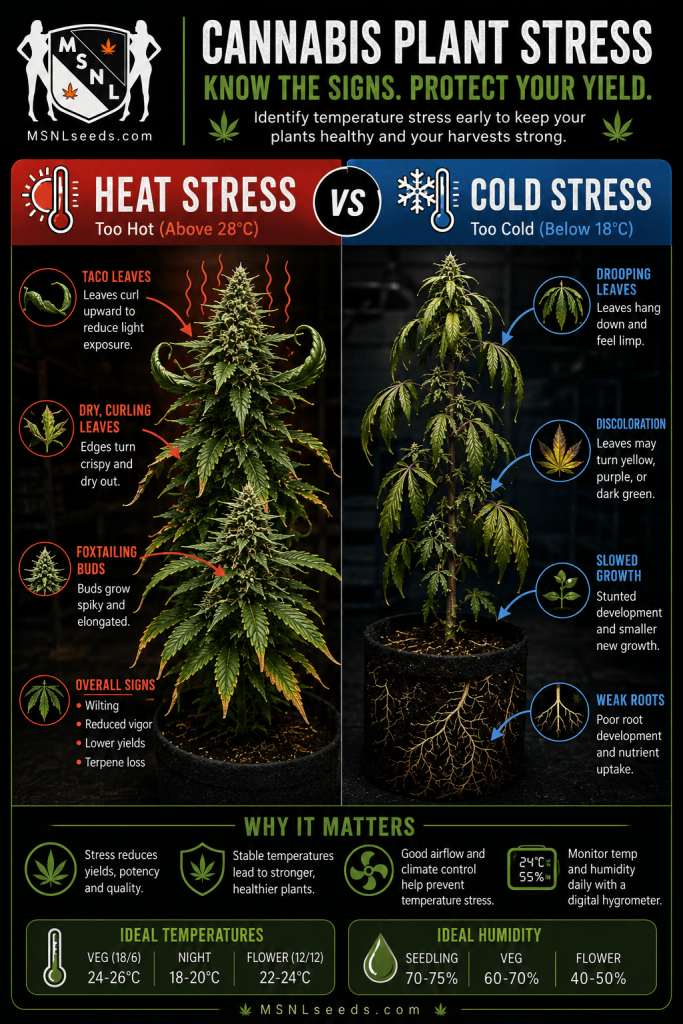
Leaf symptoms. The most common visible sign is "leaf taco-ing" or "canoeing" — leaves curling upward along their length, exposing more of the underside to reduce direct sun exposure. This is the plant's own defense mechanism working, but it's also a clear signal that conditions have crossed into stressful territory.
Bleaching or yellowing near the light source. For indoor growers specifically, leaves and bud sites closest to the grow light can show bleaching (a washed-out, pale appearance) when the light is positioned too close or is simply too powerful for the distance it's mounted at — a different cause than ambient heat, but often confused with it.
Slowed growth and reduced bud density. Sustained heat stress during flowering can lead to looser, less dense buds and slower overall development, even if the plant doesn't show dramatic leaf symptoms.
Wilting despite adequate watering. If a plant looks wilted or droopy even though the growing medium is appropriately moist, heat (rather than water) is often the actual cause — a common point of confusion for growers who respond by overwatering an already-stressed plant.
Outdoor Heat Management
Shade cloth. A 30–50% shade-rated cloth draped over plants during the most intense midday and afternoon sun is one of the most effective and low-cost ways to reduce heat stress in outdoor and greenhouse growing, without blocking so much light that growth suffers. This is especially relevant for growers in low-desert climates like Arizona or parts of Nevada, where summer heat is the primary growing challenge.
Consistent, deeper watering. Hot, dry conditions increase water demand significantly. Rather than frequent shallow watering, deeper, less frequent watering encourages roots to grow further into the growing medium, which helps plants handle heat more resiliently. Drip irrigation systems are worth considering for outdoor growers in consistently hot climates, since manual watering can struggle to keep pace during heat waves.
Time-of-day considerations. Watering in the early morning, before the heat of the day sets in, gives plants the best chance to take up water before transpiration demand peaks.
Container color and material. Dark-colored containers absorb more heat than light-colored ones, which can raise root-zone temperature significantly in direct sun. Light-colored fabric pots are a reasonable choice for hot-climate outdoor growing, both for the airflow fabric pots provide and for reduced heat absorption.
Indoor Heat Management
Light distance and wattage. Match your grow light's power to your space size, and follow the manufacturer's recommended hanging distance — a light mounted too close for its wattage is one of the most common causes of indoor heat stress, independent of ambient room temperature.
Ventilation is doing double duty. The same inline fan and ducting setup that manages humidity (covered in our Mold Prevention Tips guide) is also your primary tool for heat management indoors — actively exhausting warm air rather than letting it accumulate in an enclosed tent matters more than almost anything else for indoor heat control.
Air conditioning for serious heat control. In spaces where ambient room temperature itself runs hot (a garage, an uninsulated room, or during a regional heat wave), a small AC unit or portable cooling system may be necessary beyond what ventilation alone can manage — worth planning for if you're setting up in a naturally warm space.
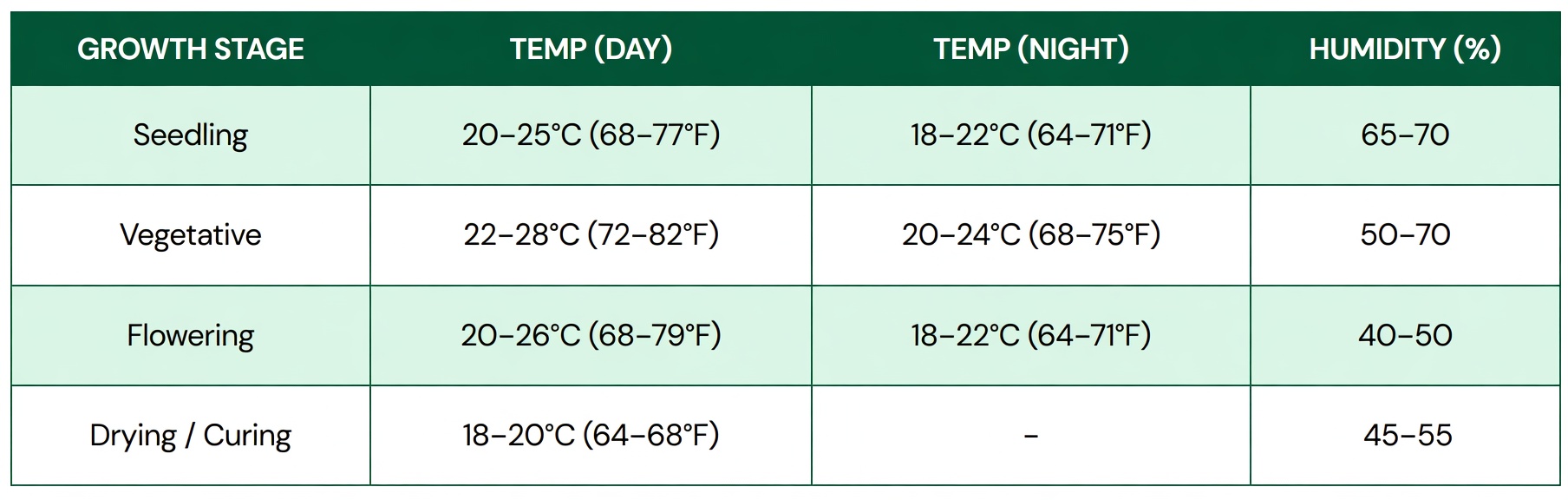
Target temperature ranges. Most cannabis growth stages do best between roughly 70–85°F with lights on, with a modest drop during the dark period. Sustained temperatures above 85–90°F, especially combined with high-intensity lighting, are where heat stress symptoms typically begin to appear.
Heat and Nutrient Uptake
Heat stress doesn't just affect visible plant tissue — it can also affect how well a plant takes up nutrients, since root function and water uptake are connected. If you're seeing deficiency-like symptoms during a heat wave, it's worth checking whether heat (not an actual nutrient shortage) is the underlying cause before adjusting your feeding schedule. Our pH Management Guide covers nutrient lockout in more detail, including how to tell it apart from other stress symptoms.
Frequently Asked Questions
How hot is too hot for cannabis?
Sustained temperatures above 85–90°F, especially with high-intensity indoor lighting or direct outdoor sun during flowering, are where heat stress typically becomes a real concern. Brief spikes are usually tolerable; prolonged exposure is what causes lasting stress.
Should I mist my plants to cool them down during a heat wave?
Generally not recommended, especially during flowering — misting raises humidity right at the canopy, which can increase mold risk exactly when dense buds are most vulnerable. See our Mold Prevention Tips guide for why humidity control matters more as flowering progresses.
Can heat stress affect potency or yield?
Yes — sustained heat stress during flowering can lead to looser bud structure, reduced density, and in some cases lower overall yield, even when a plant survives the stress without dying.
Are some strains more heat-tolerant than others?
Yes, generally. Sativa-dominant strains and genetics bred specifically for hot, arid climates tend to handle heat better than indica-dominant strains bred for cooler regions. Our Strain Comparison Guide notes climate suitability across our catalog if you're choosing with heat tolerance in mind.